Yipisale
Anacyclus Pyrethrum Root Powder (Akarkara, Pellitory Root)
Anacyclus Pyrethrum Root Powder (Akarkara, Pellitory Root)
Couldn't load pickup availability
What is Akarkara Root Powder?
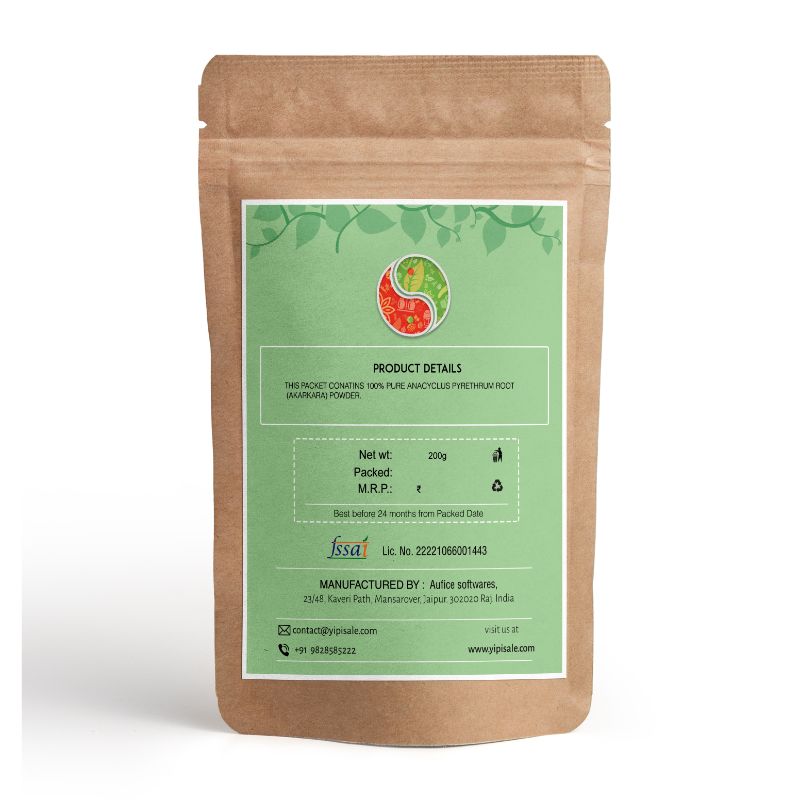
Akarkara (Anacyclus pyrethrum), also called Pellitory root or Mount Atlas daisy, is a small perennial plant of the daisy family. The root is the part used. It is pungent, aromatic and warming, and it has a place in both Ayurvedic and Unani practice. This powder is made only from the dried root, naturally sun-dried and finely ground, with no fillers and no additives.
In Ayurveda it is described as a pungent, heating herb, taken in small amounts as a simple powder with honey or warm water. The root is strong, so a little goes a long way. It can tingle or numb the mouth for a short while.
Ayurvedic Profile
| Ayurvedic quality | Detail |
|---|---|
| Ayurvedic names | Akarkara, Akarakarabha |
| Part used | Root |
| Rasa (taste) | Katu (pungent) |
| Guna (qualities) | Laghu (light), Tikshna (sharp) |
| Virya (potency) | Ushna (heating) |
| Vipaka (after digestion) | Katu |
| Doshas | Balances Kapha and Vata. Pitta types should avoid it. |
| Traditional preparation | Churna (powder), taken in small amounts with honey or warm water |
You may also like
Anacyclus Pyrethrum Root (whole root)
Who Commonly Uses this Herb?
- People who follow an Ayurvedic daily routine
- Those who prefer a single-herb powder with nothing added
- Kapha and Vata constitutions, in traditional practice
How to Use & Dosage
- Take ¼ to ½ teaspoon (about 1 to 2 g) of Akarkara root powder once a day. Please do not take more than ½ teaspoon a day.
- Mix it with a little honey or stir it into a glass of warm water, and take it after a meal.
- If you are new to this herb, start with ¼ teaspoon for the first week and see how you feel.
- The powder is very pungent. Do not hold it in the mouth, and wash it down well.
Precautions
- Pregnant or breastfeeding women
- Anyone who takes regular medicines
- Anyone with a medical condition
- Pitta constitutions, and anyone who feels a lot of heat in the body
- Children under 18
- Anyone with surgery planned in the next 2 weeks
- Anyone with an allergy to plants in the daisy family, such as ragweed, marigold or chrysanthemum
Stop and see a doctor if you notice a burning feeling in the mouth or stomach, nausea, dizziness, a rash or any new symptom. This herb is a traditional addition to a healthy routine and does not replace any medicine your doctor has prescribed.
Product Details
| Detail | Information |
|---|---|
| Botanical Name | Anacyclus pyrethrum |
| Common Names | Akarkara, Akarakarabha, Pellitory root, Spanish pellitory, Mount Atlas daisy |
| Form | Fine root powder |
| Processing | Roots naturally sun-dried and finely ground |
| Taste | Pungent and warming, with an aromatic smell |
| Shelf Life | 24 months from packaging |
| Storage | Keep in an airtight container in a cool, dry place, away from sunlight |
| Packaging | Hygienically packed |
| Available Sizes | 200 g, 400 g, 800 g, 1 kg |
Frequently Asked Questions
What is Akarkara?
Akarkara is the Hindi name of Anacyclus pyrethrum, also called Pellitory root or Mount Atlas daisy. The root is the part used.
How do I take Akarkara powder?
Mix ¼ to ½ teaspoon (about 1 to 2 g) with a little honey or warm water and take it once a day after a meal. Start with ¼ teaspoon if you are new to it.
What does it taste like?
It is pungent and warming, with an aromatic smell. It can tingle or numb the tongue for a short while, so mixing it with honey or warm water helps.
What part of the plant is in this powder?
Only the dried root. Nothing else is added.
Can I take it every day, or with other medicines?
It is a strong herb, so please keep to the small amount above. If you take regular medicines or have a medical condition, please talk to your doctor or pharmacist first.
Gentle Herbal Reminder
Herbs are traditionally taken as part of a steady daily routine. Be patient, be consistent, and listen to your body.
Important Note
COA: Available on request (chargeable).
Customs Delay: Delivery may be affected if the parcel is held at customs for inspection.
Read more: Our blog post on Akarkara (Pellitory root)
Not sure which herb suits you?
Every body is different. What suits a friend may not suit you, especially if you take medicines or have a health condition. Our Certified Naturopath can look at your routine and your goals and help you choose the right herbs.
Share